Audio Cassette Digitizing in London, Ontario
Somewhere in a box, there's a tape with someone's voice on it. That signal won't last forever.
500+ tapes digitized since 2019 · Near Oxford & Wonderland, London ON
What Does an Audio Cassette Look Like?
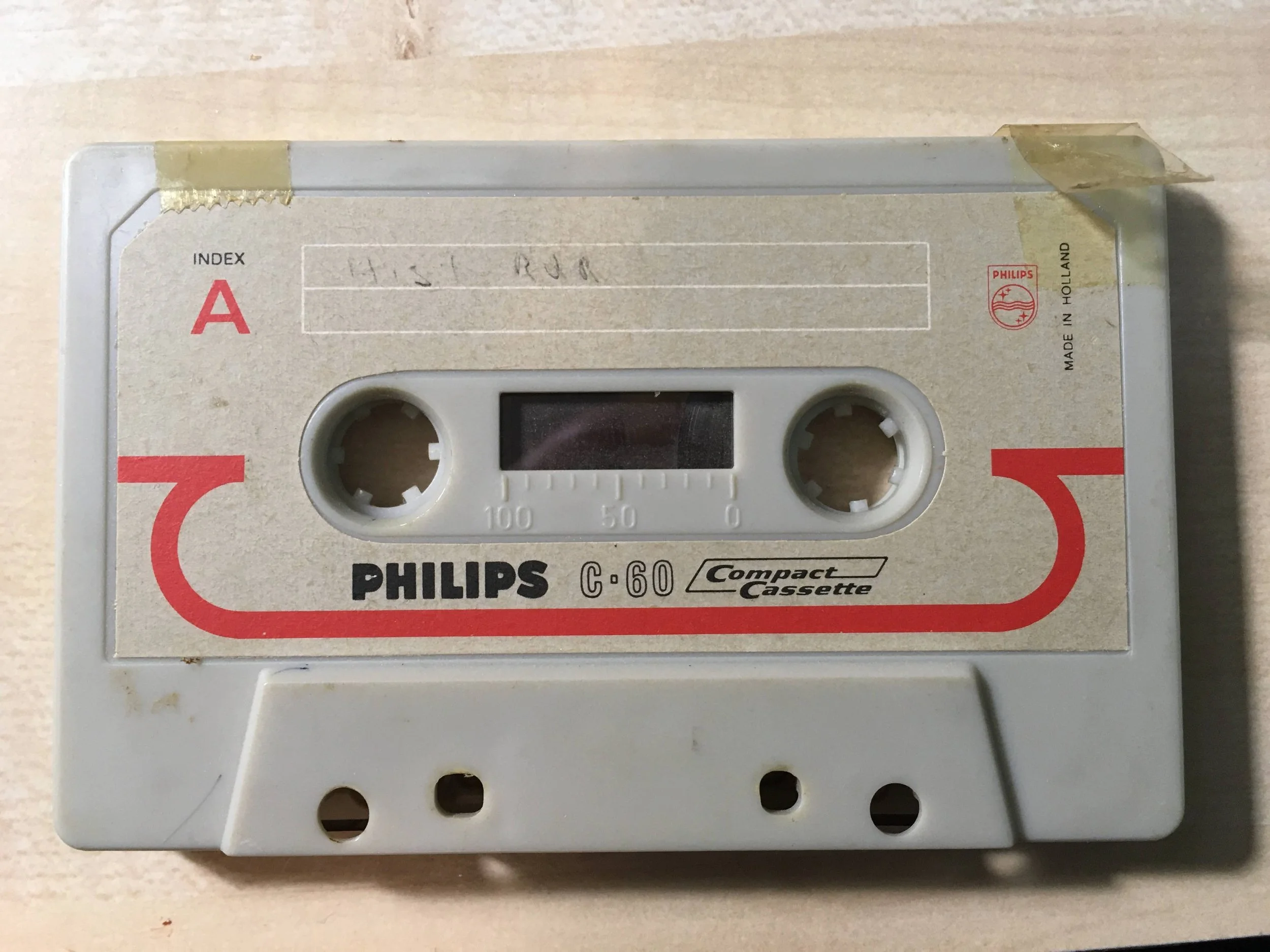
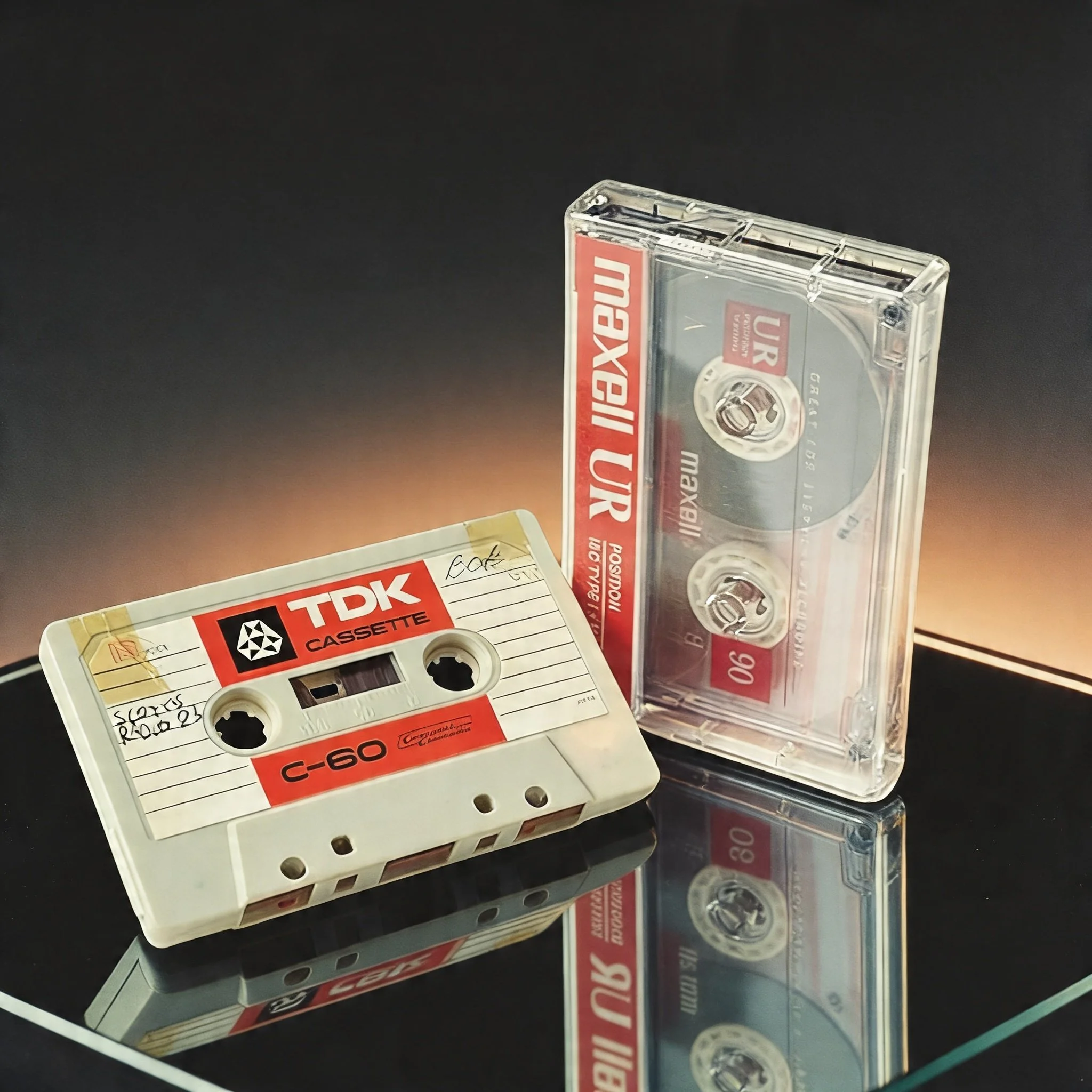
The compact audio cassette has been around since the 1960s, and most people recognize it on sight: a small rectangular plastic shell, roughly 10cm × 6.4cm, with two clear or semi-transparent windows showing the tape spools inside. The tape itself is a thin brown or dark brown strip wound between the reels.
Cassettes have two sides — Side A and Side B — each recorded separately. The tape length is usually printed on the label or shell: C-60 (30 minutes per side), C-90 (45 minutes per side), and C-120 (60 minutes per side) are the most common.
Common brands: TDK (the D, SA, and AR series), Maxell (UR, XLII, and MX), Sony (HF and EX), Fuji, BASF, Memorex, and Scotch. High-bias (Type II) chrome tapes like the TDK SA and Maxell XLII were used for music recordings where quality mattered; standard ferric (Type I) tapes like the TDK D and Maxell UR were used for everything else.
What People Find on Old Cassettes
Audio cassettes were used for almost everything — and a lot of what's on them was never recorded any other way.
Mixtapes and recorded music made for someone specific
Voice recordings and personal audio diaries
Interviews, oral histories, and family stories
Wedding speeches, toasts, and ceremony audio
Answering machine recordings saved to tape
Band rehearsals, demos, and original music
School or work recordings — lectures, meetings, presentations
Home recordings of people whose voices are otherwise gone
A cassette with handwriting on the label is almost always something personal. The person who wrote that label had a reason for keeping it.
Cassette Tape Doesn't Hold Forever
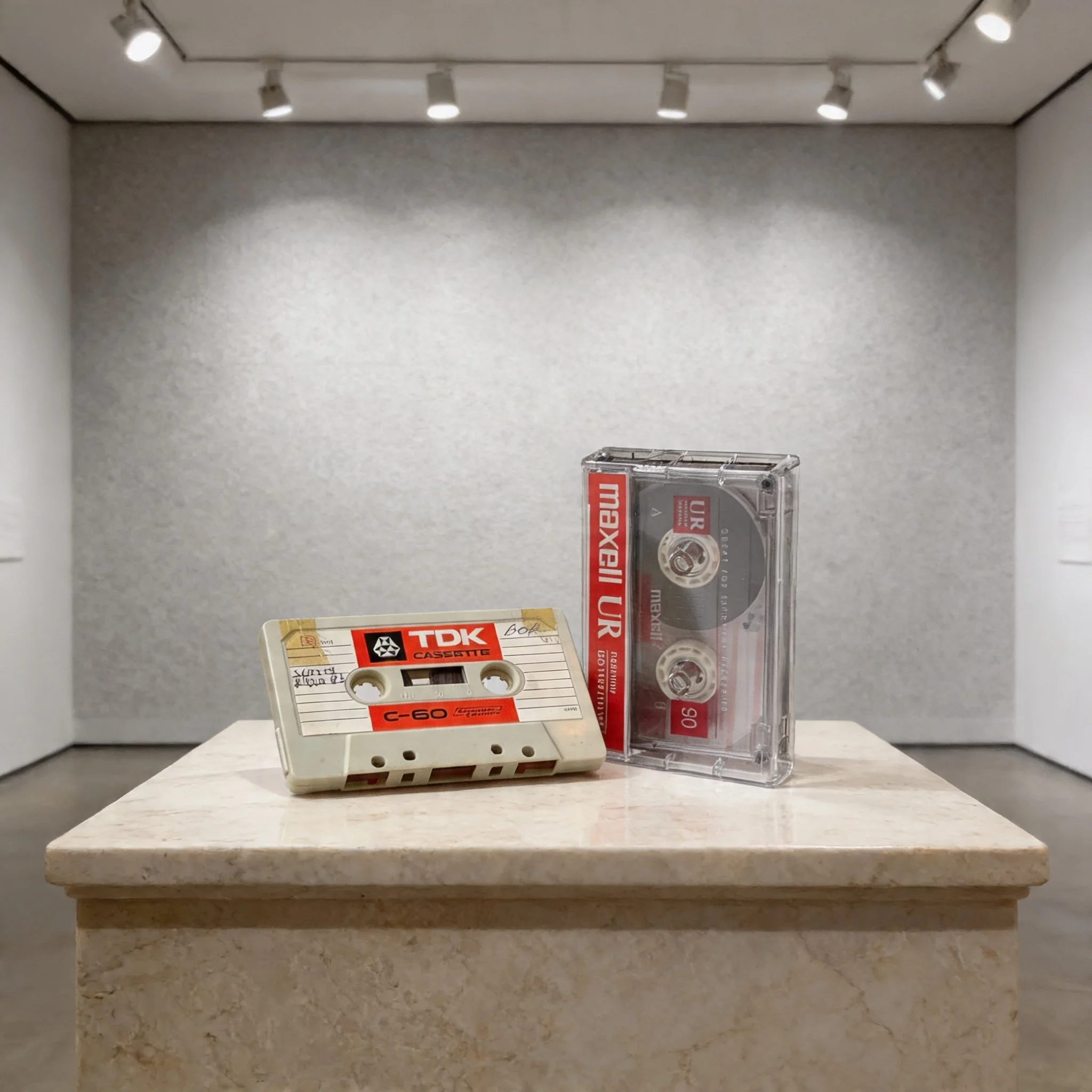
Audio cassette tape uses the same basic technology as video tape: a thin layer of magnetic oxide bonded to a plastic backing with a chemical binder. As that binder ages, it breaks down. The oxide sheds. The signal weakens. This process is happening whether the tape is played or not.
Cassette tape is extremely narrow — just 3.81mm wide — which means there's very little physical margin for error. A small amount of oxide loss that a VHS tape might absorb without noticeable effect can result in audible dropout on a cassette: a word cut off, a note that disappears, a voice that momentarily drops out.
There's also print-through — a subtler form of degradation where the magnetic signal from one layer of tape bleeds onto the adjacent layer. On a densely wound tape that's been sitting for decades, this shows up as a faint ghost of the next passage audible just before you hear the real thing. It's most noticeable on quiet recordings and voice tapes.
Tape stretch is another real risk. Cassette tape that's been played on worn or cheap equipment — or stored somewhere warm — can permanently stretch, causing the pitch and tempo to waver in ways that can't be fully corrected.
And then there are the physical risks: a cracked shell, a seized hub, tape that's partially pulled from the spool.
If someone kept this tape, it was for a reason. Don't wait to find out what's on it.
Straightforward pricing. No surprises at pickup.
$50 per tape covers up to 2 hours of content — both sides — with a USB stick included.
Most cassettes fall well within that: a C-90 runs 90 minutes total, a C-120 runs two hours exactly. Overage is rare with this format, but if a tape runs long, we confirm before proceeding.
| Tapes | Discount |
|---|---|
| 1–9 tapes | Standard rate |
| 10–19 tapes | 10% off |
| 20+ tapes | 15% off |
Discounts apply to the base rate. Overage charges are separate.
What happens to your tapes.
Step 1: Drop off your tapes Book a slot online. You'll get a confirmation with the drop-off address near Oxford & Wonderland. No shipping — everything stays local.
Step 2: We digitize by hand Each tape is played back in real time on calibrated equipment. There's no batch processing — your tapes are handled individually and inspected before and after transfer.
Step 3: Pick up your files Your audio is delivered on a USB stick (included in the price). Audio files are MP3, WAV, or whichever codec you prefer — playable on any modern device. Cloud delivery via Dropbox is available on request.
Smart questions about cassette tape audio preservation:
-
Yes. Side A and Side B are each played back and captured separately. Your USB stick will have both sides as individual files, clearly labelled. If one side is blank, we'll note that — you're not charged for empty tape.
-
Audio cassettes are delivered as MP3 files — compatible with every phone, computer, and media player made in the last twenty years. If you need a different format (WAV, FLAC, AIFF), just let us know when you drop off and we can accommodate that.
-
Often yes, depending on the extent of the damage. A tape that's been pulled from the shell but is otherwise intact can usually be wound back in carefully. A crease or fold is more serious — it may cause a brief dropout at that point during playback, but the rest of the tape is often fine. Contact us before bringing in anything that looks physically damaged and we'll tell you what we can do.
-
Not for the digitizing process — we capture whatever is on the tape. If you have a mix of music recordings and personal recordings in the same batch, just drop them all off together. The output files are for your personal use, and we don't filter or sort the content.
Booking takes 2 minutes.
Your tapes are waiting.
Questions first? Call or text (226) 378-4695 · cygnalsmultimedia@gmail.com